Understanding Stuttering in Young Children
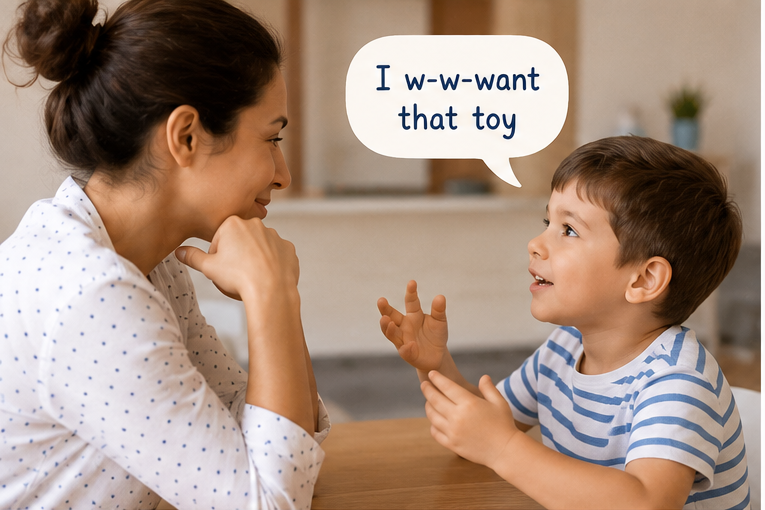
It can be really challenging watching your child get stuck on a word, sometimes repeating the first sound over and over, or freezing mid-sentence as though the words just will not come. Should you say something? Should you wait the moment out or interrupt? Is this normal? Should you wait and see if they grow out of it?
These are questions we hear from parents all the time and truthfully, stuttering is far more common than most people realise! We’ve seen this for ourselves in the clinic lately, with a big uptick in little stutterers coming through the BSLC clinic! Stuttering is far more nuanced than most would think, so we thought we could unpack it together here. This blog will focus on stuttering in young children.
What Is Stuttering?
Stuttering (also referred to as a fluency disorder within the field of speech therapy) is a condition that affects the flow and rhythm of speech. Generally, children who stutter typically have intact language skills and know exactly what they want to communicate, but the challenge is in the physical act of producing speech smoothly.
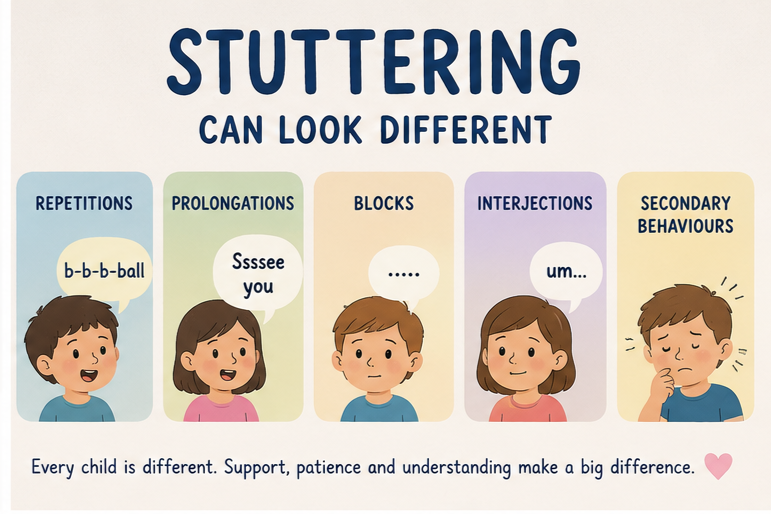
Stuttering can look and sound different from child to child. Some common behaviours include:
Repetitions: repeating a sound, syllable, or word (e.g. "I w-w-want that" or "I want want want that")
Prolongations: stretching a sound out (e.g. "Ssssee you later")
Blocks: getting stuck silently before or during a word, as though the sound will not come out
Interjections: filling pauses with "um," "uh," or "like" while searching for fluency
Secondary behaviours: blinking, tension in the face or body, or turning away, which can develop as a child tries to push through moments of stuttering
Stuttering typically emerges between the ages of two and five, often during a period of rapid language development. Because of this, stuttering can be considered a typical part of development, often resolving naturally for many. For others, it can persist. Knowing how to recognise when intervention may be necessary is important.
Busting the Myths
There is a lot of well-meaning advice floating around when it comes to stuttering, but, truthfully it’s not always applicable or helpful. Let’s clear a few things up!
"Just tell them to slow down and take a breath." This is one of the most common instincts, however, for young children it can be one of the least helpful. Asking a child to slow down, breathe, or start again draws attention to the stutter, increases self-awareness, and can add to the very pressure that makes stuttering worse. It does not address the underlying pattern and can make a child feel that the way they speak is wrong or shameful.
"They will grow out of it."
Some children do recover naturally, and whether this happens depends on a number of factors. Spontaneous recovery is more likely when:
Stuttering onset was recent (within the last six to twelve months)
The child is younger (under five)
The child is female (girls recover at higher rates than boys)
There is no family history of persistent stuttering
The child shows no awareness of or distress about their speech
But waiting and watching without any support is not always the right call. If there is a known family history of stuttering, if your child is visibly aware of or distressed during moments of stuttering, or if stuttering has been present for more than three months, it is recommended to consult a speech-language pathologist rather than adopting a wait-and-see approach without professional guidance.
"It is caused by anxiety or trauma." Stuttering is considered a neurological condition, not a psychological one. It is related to differences in the way the brain coordinates the complex motor planning required for speech. Increased cognitive load (the amount of information our brain can process at any given time) interferes with speech planning and phonological processing, making fluent speech more difficult for those who stutter compared to those who do not. Because of this, anxiety and emotional state place an additional load on the processing brain, which in turn does have a significant influence on stuttering. We see this frequently as a pattern where a child who is nervous, excited, or under pressure will often stutter more. It’s also why sometimes, the same child can be relatively fluent at home and significantly more dysfluent in the classroom, during assessments, or in any situation where pressure is higher. It’s not that the stutter has gotten worse, but the load has increased.
"Stuttering means something is wrong with their intelligence or development." Absolutely not. Many highly articulate, intellectually capable children and adults stutter. Stuttering is specific to the fluency of speech production and says nothing about a child's cognitive ability, intelligence, or potential.
Stuttering and Multilingual Children
For families raising children in more than one language (something many of our Bali families know well), stuttering can feel even more confusing. You might notice that your child stutters more in one language than another, or more when switching between languages, and wonder whether the bilingualism itself is the problem.
Bilingualism does not cause stuttering, however, it can influence how stuttering presents. When a child is speaking in their less dominant or less automatised language, the cognitive demand is higher. As discussed above, increased cognitive load places additional pressure on processing and interacts with the motor planning demands of fluent speech, which sometimes means stuttering is more noticeable in a second language. Children are working harder to retrieve vocabulary, build grammar, and monitor meaning all at once.
This is entirely normal and does not mean the child is regressing or getting worse. It simply reflects the relationship between cognitive load, communicative pressure, and fluency. With support and consistent exposure, most bilingual children find their footing across both languages.
Why Early Intervention Matters
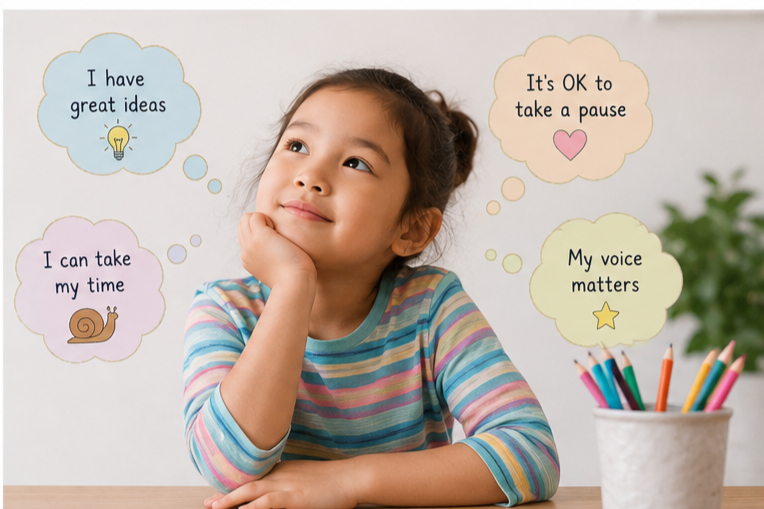
The early years of a child's life represent a critical window for overall development, especially for communication. The brain is at its most plastic in these years, and early support can make a significant and lasting difference to long-term outcomes.
Research consistently shows that children who receive early intervention for stuttering have significantly better outcomes than those who do not. The Lidcombe Program is one of the most well-researched and evidence-based approaches for stuttering in young children, which works because it capitalises on this early window. This program works with the child's developing brain to gently reshape speech patterns early, before avoidance and awareness take hold. It is a parent-delivered program, meaning the most important therapy happens at home, in everyday moments, guided by a speech-language pathologist (Australian Stuttering Research Centre, n.d.). At BSLC, the Lidcombe Program is generally our first-line approach for young children who stutter, and we have seen remarkable results when families engage consistently with the home program.
If stuttering has persisted beyond six months, if there is a family history, or if your child is showing signs of frustration, avoidance, or emotional distress around speaking, early assessment and intervention is strongly recommended.
Strategies for Now
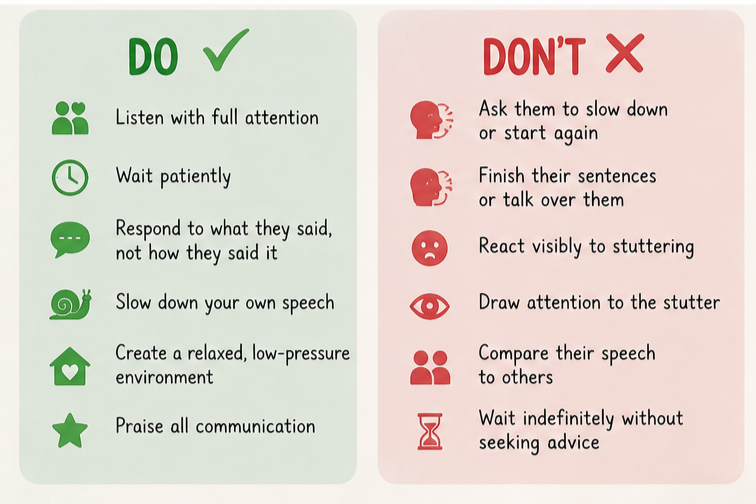
You do not need a diagnosis or a therapy plan to start supporting your child's fluency today, but the way you respond in the moment matters enormously.
Do:
Maintain natural eye contact and give your child your full attention
Wait calmly and patiently while they finish their thought, resist the urge to jump in
Respond to what they said, not how they said it. For example, if your child stutters trying to tell you something, simply repeat back to them what they said once they are finished. This confirms you understood and keeps the focus on the message, not the stutter
Slow down your own speech slightly, children often mirror the pace of those around them
Create a relaxed, low-pressure communication environment at home
Praise your child for all kinds of communication (talking, trying, connecting)
Don't:
Ask them to slow down, take a breath, or start again
Finish their sentences or talk over them
React visibly to moments of stuttering, even a sympathetic expression can increase pressure
Draw attention to the stutter in front of others
Compare their speech to siblings or peers
Wait indefinitely without seeking professional advice if you have concerns
When To Reach Out
We recommend seeking an assessment from a speech-language pathologist if:
Your child has been stuttering for more than 3 months
There is a family history of stuttering
Stuttering is increasing in frequency or severity
Your child appears aware of, frustrated by, or distressed about their speech
You notice secondary behaviours such as facial tension, blinking, or avoidance
Your child is avoiding speaking situations or saying less than they used to
An early conversation with an SLP can give you the information and tools you need, whether that means beginning therapy or simply monitoring with confidence. With the right support, the right environment, and the right tools, children who stutter can and do become confident, expressive, and connected communicators.
If you have questions or concerns about your child's fluency, we would love to hear from you. Reach out via our Booking Form or WhatsApp, we are always happy to chat!